Introduction
Technology is one of the most impactful and rapidly changing aspects
of our world today. Most people use computer technology frequently in both
their personal and professional lives and have done so for many years now. In
fact, there is an entire generation that is growing into adulthood that knows nothing
else but a world where the internet and computers are king. Amazingly, the
integration of technology into education is still sloppy and very little of the
formal curriculum is devoted to teaching young people how to use technology.
This is clearly a disconnect. How can we live in a world where technology
is such a critical part of every aspect of our lives, including professionally,
and yet it is still under addressed in schools? School is the very place which
is supposed to prepare us for the real, working world, and new technologies and
their uses are under-taught. Obviously, technology
needs to be more effectively and seamlessly integrated into school curriculums
in order to properly prepare students to succeed in todays’ world. This
isn’t to say that technology isn’t incorporated at all into education, but
rather to point out that if the integration were more natural, it would be more
effective. The following is an account of my progression throughout the educational
system and my encounters with technology and throughout.
A personal
story of technology in education
As someone
who has been a student for the past 17 years (the vast majority of my life), education
has played a massive rile in determining who I am and what skills I have. Growing
up in the 21st century has meant that as I’ve gotten older, I have been
more and more surrounded by technology. My experience with education has been
no different.
When I was 4
years old in Ms. Melissa’s Pre-K class at Hilltop Montessori School, technology
was essentially a non-factor in my education. I played with blocks, learned the
alphabet by tracing letters with my fingers and took naps. When I got to elementary
school technology was still a small factor in the overall scope of my education,
but it was present. I wrote a few book reports using Microsoft Word on my home
desktop computer, but students were not allowed to use computers in the
classroom until I reached 4th grade.
At this
point, technology’s role in my education began to take off. I regularly had to
type up assignments for school and began to learn how to use the internet to do
research on educational topics. In order to graduate 6th grade,
every student at my school had to use PowerPoint to give a presentation on a researched
topic of their choosing in front of the whole class. This was an absolute “trial
by fire” experience for me and my classmates because we had to do something
completely new and strange to us (research and present) while using technologies
(the internet and Powerpoint) that we were unfamiliar with in an academic context.
Although it was a very difficult and frustrating assignment at the time, the
experiential nature of the project helped me learn faster and more effectively.
Once I got to
middle school, computers were used in the classroom on nearly a daily basis and
I started to learn about the capabilities of creating and editing various types
of media on the computer. I also regularly typed essays and did research using
computers both in the classroom and at home. 8th grade was also when
I got my first laptop, which I used for both personal and educational reasons.
In high
school I started using email for school purposes, began accessing textbooks and
readings online, using remote desktop and Google Drive for my files and was
exposed to LibGuides and other advanced research tools. There were some aspects
which were taught in my classes, such as how to create citations with EasyBib, but
the majority of the relationship between technology and learning was left unaddressed.
Now that I am
in college, it is impossible to do even a single assignment without technology.
All information and assignments for my classes is distributed through
Blackboard, I haven’t handed in something handwritten since I’ve been at
college and I don’t have a single hardcopy textbook.
Technology is
omnipresent in my educational experience, yet only a small few of the ways
which I use technology in relationship to learning were shown to me in an
academic setting. I am also constantly reminded that computer science skills
are highly sought after in today’s job market and then learning them will make
it far easier to get a better job with a higher salary right out of college but
none of my classes have tried to teach coding in any way.
I tell this
story about the evolution of the role of technology in education because it does
a good job illustrating how the role of technology in education changes as
students get older as well as evolves over time. It also serves as an example
of how even though technology plays a massive role in today’s educational
environment, there is almost zero formal instruction regarding the best use of technology.
Technologies
that Exist Today
During
this narrative I mentioned several of the primary ways in which technology is
currently used in the classroom including: email, internet research, library databases,
creating documents and presentations, creating media of various varieties,
citing work, and Blackboard (or similar applications). In my research I also
came across several other forms of writing technology that I haven’t yet used
but seem as if they would be highly beneficial in the classroom.
As
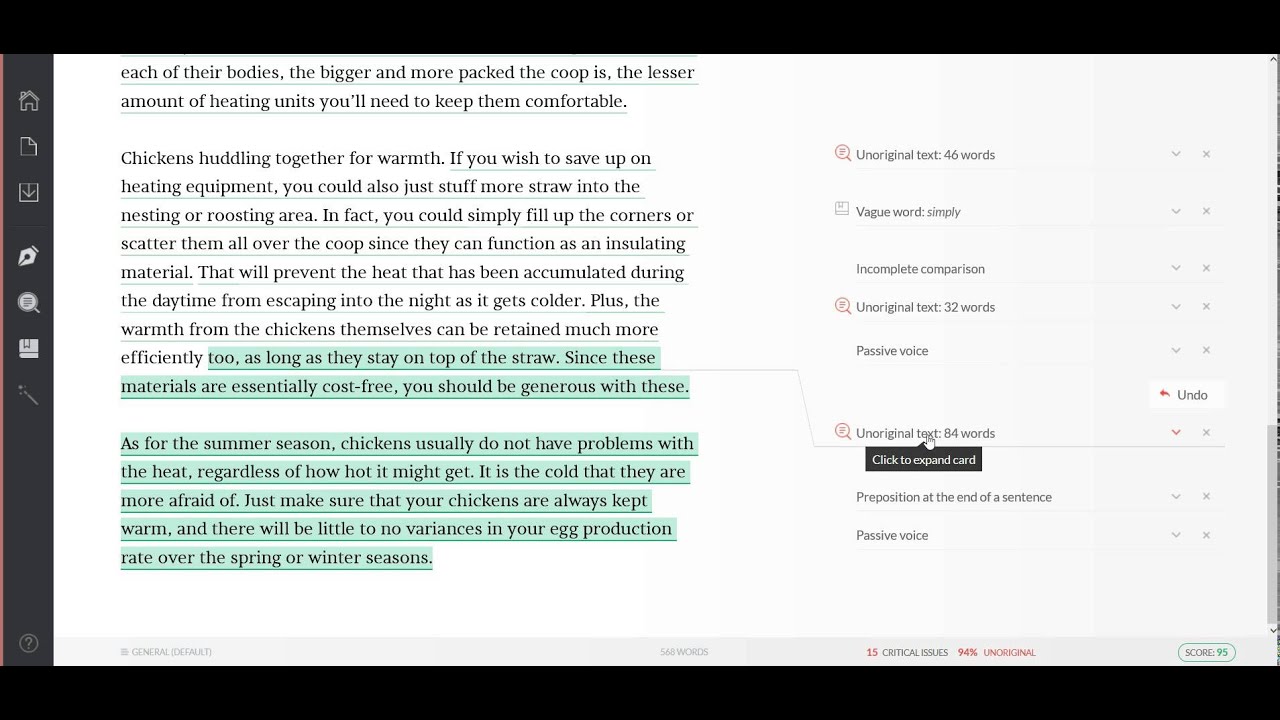
discussed in the video, Grammarly is a AI enhanced spell checking application
that is able to anticipate even the most egregious spelling and grammatical
errors and offer useful suggestions to fix them. It has even helped make it
possible for Lisa Wood Shapiro, a highly
dyslexic woman, to become a successful writer without having to reveal
her learning disability to any of her editors.
The
power of the AI in Grammarly seems perfectly suited to help students with learning
disabilities that inhibit their writing. My mom is a professor as Landmark
College, a school specifically meant for students with learning disabilities such
as dyslexia, and she immediately expressed interest in the tool when I
described it to her and described that spelling and grammatical errors are
often so rampant is papers she grades that it is hard to focus on the actual
content, tone, and form of the writing.
What
is the best way to take notes? Is a question often addressed in education,
especially at higher levels where students are often using laptops during lectures.
Many professors mandate that students use good ole-fashioned pen and to take
notes because of studies done that suggests it improves cognition of the
content and prevents distractions. However, students are often frustrated by
this because it forces them to carry around clunky notebooks for each of their
classes and means that their notes are stuck in handwritten form and can’t be
copy and pasted into other documents such as study guides.
Wall
Street Journal tech columnist David Pierce presented several solution in a
recent article, but Rocketbook was the
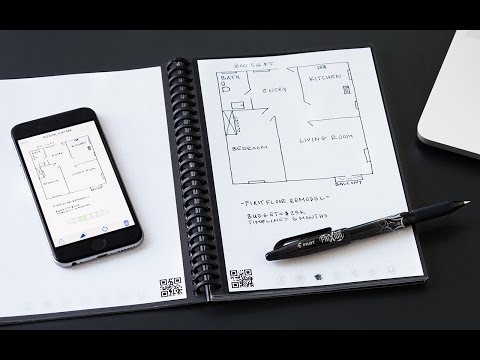
easiest and most integrated. You can write in the notebook as you would
normally but there are small identifier dots at the bottom of the page that can
be filled in according to what you want done with your note and how you want it
organized. By simply scanning the note using the Rocketbook app, your handwritten notes can be easily translated
into common digital formats such as e-mail, Evernote and Dropbox.
So
far the technologies mentioned have been supplementary to learning in the sense
that they themselves do not require extensive training or practice to use,
rather helping to make learning easier. Code.org, however, is slightly
different. A nonprofit organization whose goal is to increase access to opportunities
to learn computer science skills in school, Code.org is used by over 20 million
students in the United States and is supported by some of the world’s most
prominent tech companies such as Amazon, Microsoft, Facebook. Teaching coding
in schools is a direct way to give students a tangible skill that is in
extremely high demand in the job market and also represents the future
direction of many industries.
A Vision for
Technology in the Classroom
Up
until now, these new technologies have simply been integrated into old, traditional
education systems but there are starting to be philosophical shifts in education
and classrooms are starting to be reorganized with technology playing a
critical role.
Personalized
learning experiences is one area where there is a clear improvement from the
past. Many effective teaching methods over the years such as the Montessori
system and the Waldorf system have been centered on the fact that different
students learned in different ways and at different paces. Today, technology is
magnifying the benefit of this method. Without technology, instructors had to
be able to recognize differences among their students and tailor their teaching
to match. With new computer programs that utilize artificial intelligence, many
steps of this process are done automatically and can be much more accurate to individual
students.
The
effectiveness of personalized learning tools is helping to usher in a fundamental
shift in our understanding of the purpose of learning and the educational
system. Whereas before we looked at school as a place to learn skills to turn
students into skilled workers, there are growing schools of thought that are
centered upon helping students be able to learn on their own, using a set of
skills provided to them through education. One of the leaders of this type of
thinking Is Brian Greenberg, CEO of Silicon Schools, a company which
funds schools that create innovative and personalized learning experiences. He
claims that "the real
purpose of education is for the brain to be empowered with information, we're
teaching students to learn to think, to learn to learn, and to critically
assess a situation."
The
restructuring of the learning environment to integrate technology more effectively
and seamlessly is ongoing. Providing an environment where students become empowered
as thinkers and learners by way of technology first requires that technology is
appropriately incorporated into the learning environment. As Greenberg says, “Technology's benefit in the classroom is
all in the way it's used.”
Roadblocks to
teaching tech in school
Perhaps
the most significant roadblock to teaching both basic and advanced technologies
into school curriculums is the comfort and competency of teachers with these
tools. A shockingly low 10% of K-12 teachers “feel confident incorporating higher-level
technology into student learning” and as a result, only 20% of schools offer
classes in data analytics and 35% offer classes in computer engineering.
Just
because technology is present and taught in the school doesn’t mean it is
effective. Out of the technology use in classrooms, 60% is devoted to passive
experiences such as reading, watching videos and searching looking at websites
while just 32% of technology use is related to active, hands on uses.
This
all isn’t to say that teachers aren’t interested in more effectively
incorporating technology into their classrooms, in fact, 79% of K-12 teachers indicated
in a survey that they “would like to receive more professional development for
technology-related subjects.” Shannon Schuyler, one of the PwC employees who
was in charge of the survey put it nicely when she said, “The speed of change
in tech is so much faster. Teachers need help. Nobody is helping them gain
knowledge to keep pace … This is a role that business needs to play.”
Code.org, the nonprofit that teaches students
to code, is a great example of the power of getting businesses involved. This 3 minute video features several of the biggest names in American technology companies, including Bill Gates, Mark Zuckerberg and Sheryl Sandberg. Although they have achieved celebrity status by founding and running some of the most successful companies in the world, Gates (Microsoft) and Zuckerberg (Facebook) are both coders at heart and took out the time to teach video lessons that are featured in Code.org's "Hour of Code" and initiative to get kids in schools across the country to participate in coding lessons for just an hour in hopes that it will spur further interest and learning.
Counterarguments
(downsides of technology in the classroom)
Despite
all the amazing new technology that exists and the many ways it can be
incorporated into the learning environment, there are still many who like to
remind us of the downsides of technology in a learning environment.
English
teachers are among this group. In a
study conducted by the PEW Research Center, AP and National Writing Project
(NWP) teachers gave a less than sterling assessment of their students writing
skills and were particularly harsh when it came to “synthesizing
material into a cohesive piece of work, using appropriate tone and style, and
constructing a strong argument” and “navigating issues of fair use and
copyright in composition” rating their abilities as “fair” and “poor” respectively.
The
teachers attributed these shortcomings, in many, ways to perceived negative
impacts of technology on writing skills, such as increased focused on short, informal
written pieces (social media) and a lack of understanding of fair use
standards, to digital technology,
Technology
is also blamed for a whole host of other issues related to our youngest generation
such as increased obesity and short attention spans but that is beyond the
scope of this piece.
Conclusion
Although there are some valid complaints from teachers about the impact that technology has had on student's abilities in the classroom, when used technology plays an overwhelmingly positive role in education. It would be easy to cram a bunch of different new technologies into a curriculum and call it a day, saying you had created the education system of the future. However, this would be ineffective. There are countless ways to incorporate new digital technologies into the classroom but to truly maximize the potential success of the curriculum, and as a result the students, educational systems must be designed specifically with technology in mind and visa versa.
Sources
https://edscoop.com/k-12-teachers-are-not-confident-in-their-ability-to-teach-technology/
https://www.businessinsider.com/how-technology-is-shaping-the-future-of-education-2017-12#these-are-the-technologies-that-are-making-a-difference-in-education-right-now-6
http://www.pewinternet.org/2013/07/16/the-impact-of-digital-tools-on-student-writing-and-how-writing-is-taught-in-schools/
https://code.org/
https://www.wsj.com/articles/smartphones-killed-handwriting-lets-bring-it-back-1531659601?mod=ITP_businessandfinance_0&tesla=y
https://www.wired.com/story/end-of-dyslexia/
Comments
Post a Comment